New Research Project in the Peace Forest
Our Lilungu site is a haven of bonobo protection. The local Balanga people have strong taboos against hunting bonobos, as well as deep knowledge about the bonobos and their habitat. Lilungu hosted one of the first bonobo research programs in the DRC, conducted by scientists from the University of Barcelona in 1989-90. In 2005, BCI and the Congolese Center for Research in Ecology and Forestry (CREF) renewed and maintained monitoring of three important bonobo study groups, and established an ongoing partnership with the local communities.
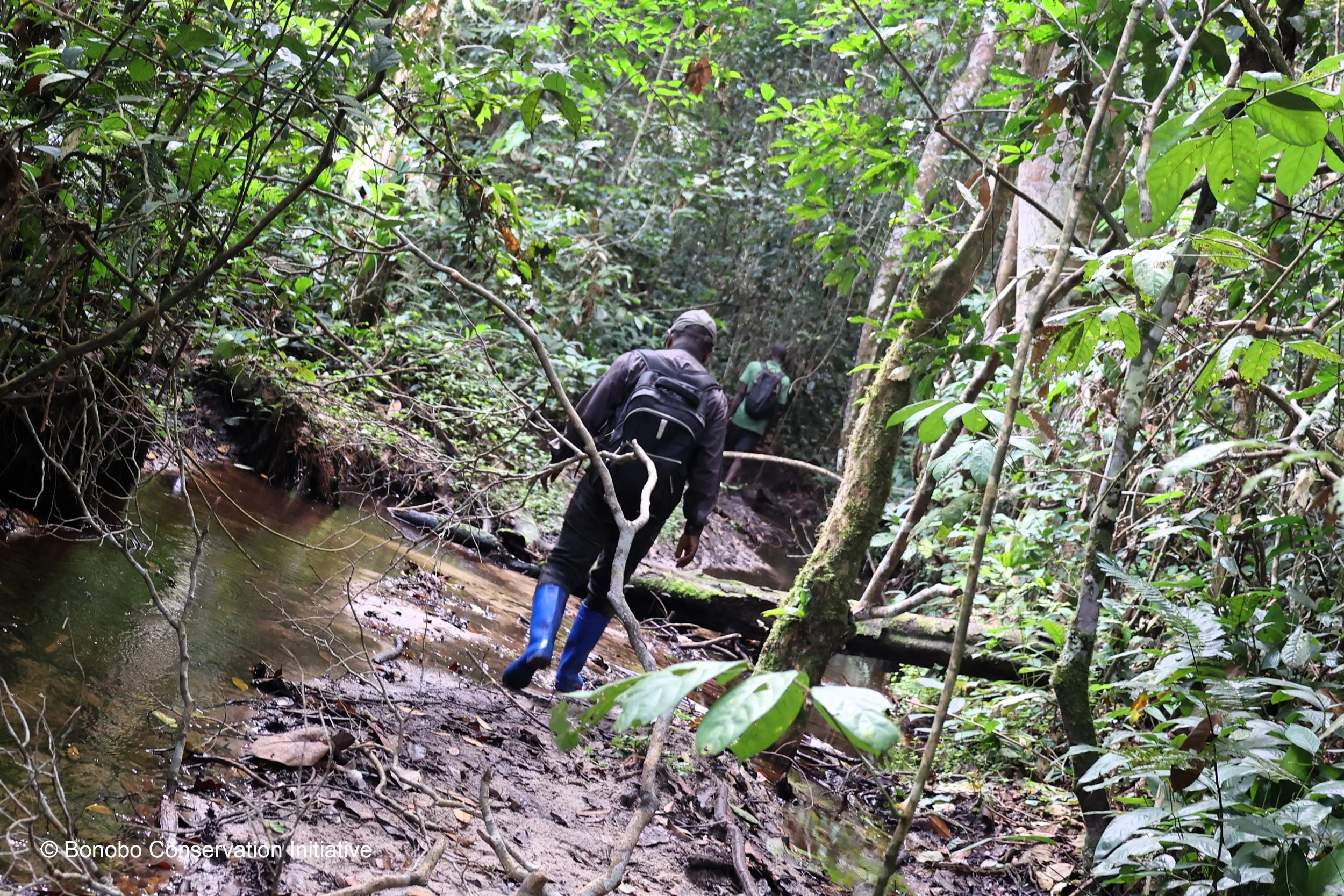
Lilungu trackers in the forest
We are happy to report that the research progress continues at Lilungu. Our partners, Wild Forests and Fauna and the Congo Biotropical Institute have laid out grids of camera traps throughout the forest. The aim is to get a broader understanding of the biodiversity in the area, and to aid in conservation planning. So far, they have recorded 24 different species, including bonobos, forest buffaloes and Congo peafowls. We can’t wait to see the interesting images and videos they capture!
We are also pleased to announce that Lilungu has become the latest site for the Bonobo Diversity (BonDiv) project. BonDiv is a range-wide international research project that aims to measure bonobo diversity at multiple sites throughout the habitat. This is a highly important project, as it helps to build the capacity of local participants, while supporting long-term research and conservation of the endangered bonobo. The BonDiv team of international and Congolese researchers, supported by BCI and local partners, is en route to the field for its 15 month mission. The team’s first steps will be to consult with the local community, to better understand the area--and identify the best spots for observing bonobos!
This work would not be possible without the strong relationship that BCI has built with its partners and with the support of generous donors like you.