
2025: The Year in Bonobos
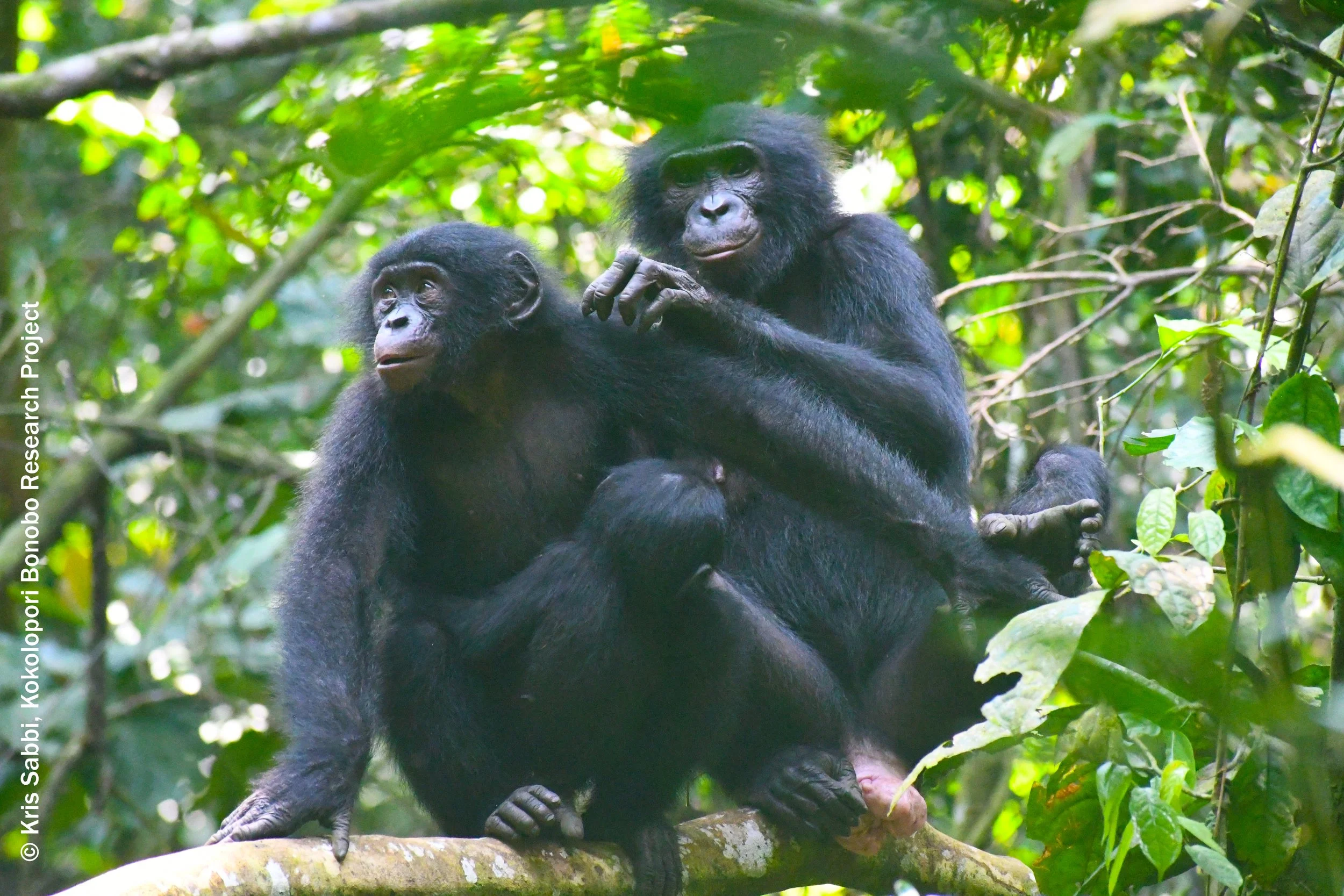
Azure, Amethyst, and Avocat of the Ekalakala bonobo group at Kokolopori
Bonobos are fascinating in so many ways—and there is still so much more we have to learn. But we’re getting there! 2025 has been a year of discovery and we want to put a spotlight on the latest research.
Even as there is much progress with research in the wild, the light eclipsed on the most important bonobo subject we’ve known so far: Kanzi. Sadly, the bonobo who famously broke the language barrier passed away in March. Kanzi demonstrated that bonobos can acquire and use human language, even though they can’t speak as we do because of the anatomy of their throats. Kanzi communicated with a keyboard with lexigrams representing words and he could understand a great deal of spoken English.

Curious and compassionate, Kanzi changed our perceptions and deeply touched all who had the privilege of knowing him—from scientists to rock stars. He even jammed with Peter Gabriel and Paul McCartney!
To learn more from those who worked with Kanzi, visit the Kanzi Legacy workshop organized by the Cornell Humanities Lab. Or check out the recent article in the New York Times “Kanzi: The bonobo that had a lot to say.”
Meanwhile, research from the Kokolopori Bonobo Reserve has revealed new insights about communication among wild bonobos, showing that they intentionally combine calls to create specific meanings. This groundbreaking discovery by Martin Surbeck and his team from Harvard University suggests that “nontrivial compositionality” might not be unique to humans after all—and hints at the roots of human language. Although Kanzi combined lexigrams to create new meanings when communicating with people, compositionality had never been observed in the wild.
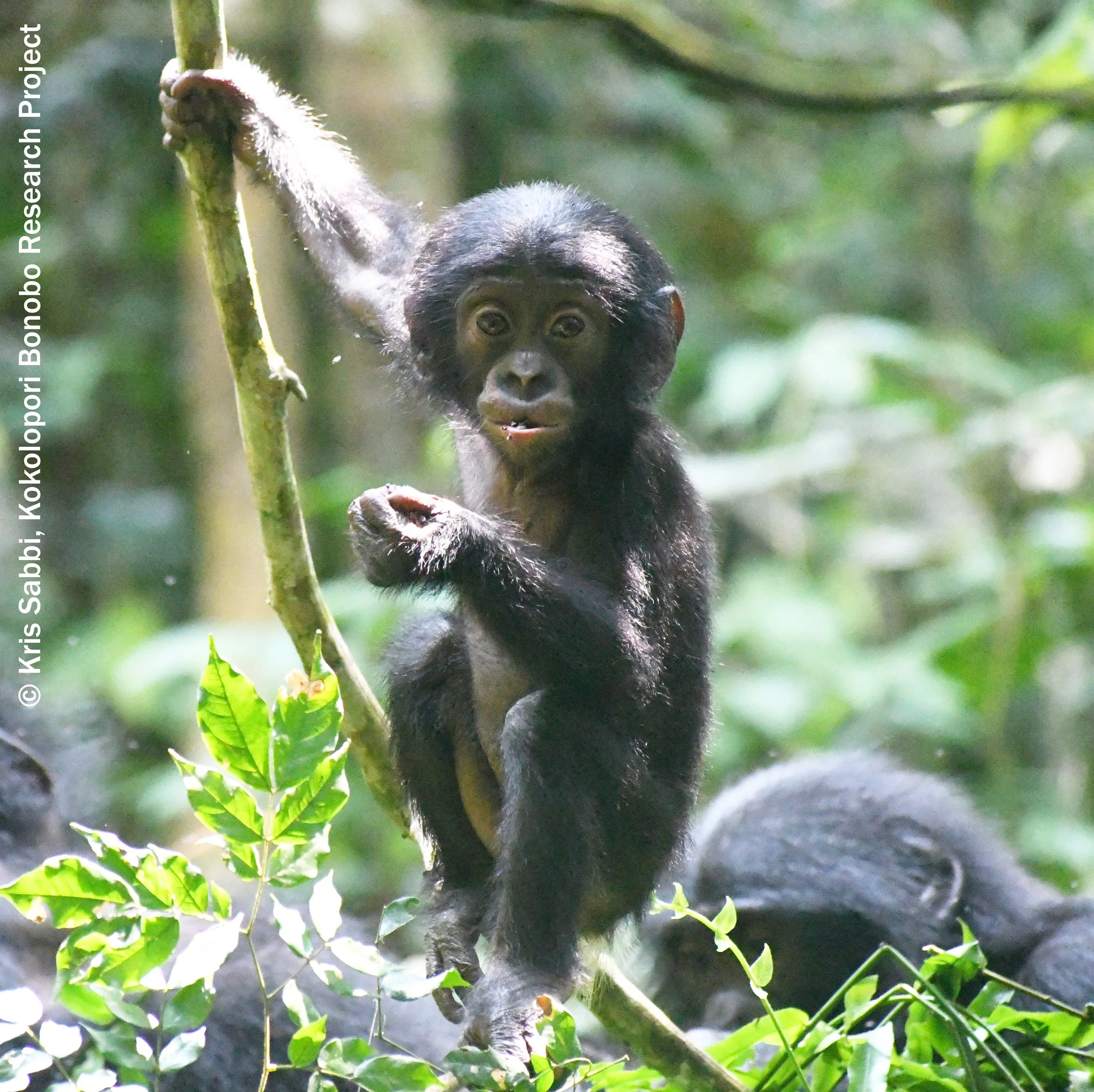
Even more exciting research emerged from Kokolopori this year too! A study on the “drivers of female power” among bonobos showed how bonobos’ remarkable “girl power” comes from one thing: they stick together. Female coalitions allow females, often unrelated, to collectively overpower physically stronger males. Beyond that, the study showed that females who lead in coalition-building tend to secure higher social status in the group at large.
Entering its 11th year, our research program at Kokolopori will keep gaining more insights about bonobos, with your support! This program built upon a decade of bonobo tracking by our local partner, Vie Sauvage, and the local communities who continue to facilitate and benefit from it.
Thank you for helping us protect our sister species—so that we may discover more!