Bonobo Research Updates
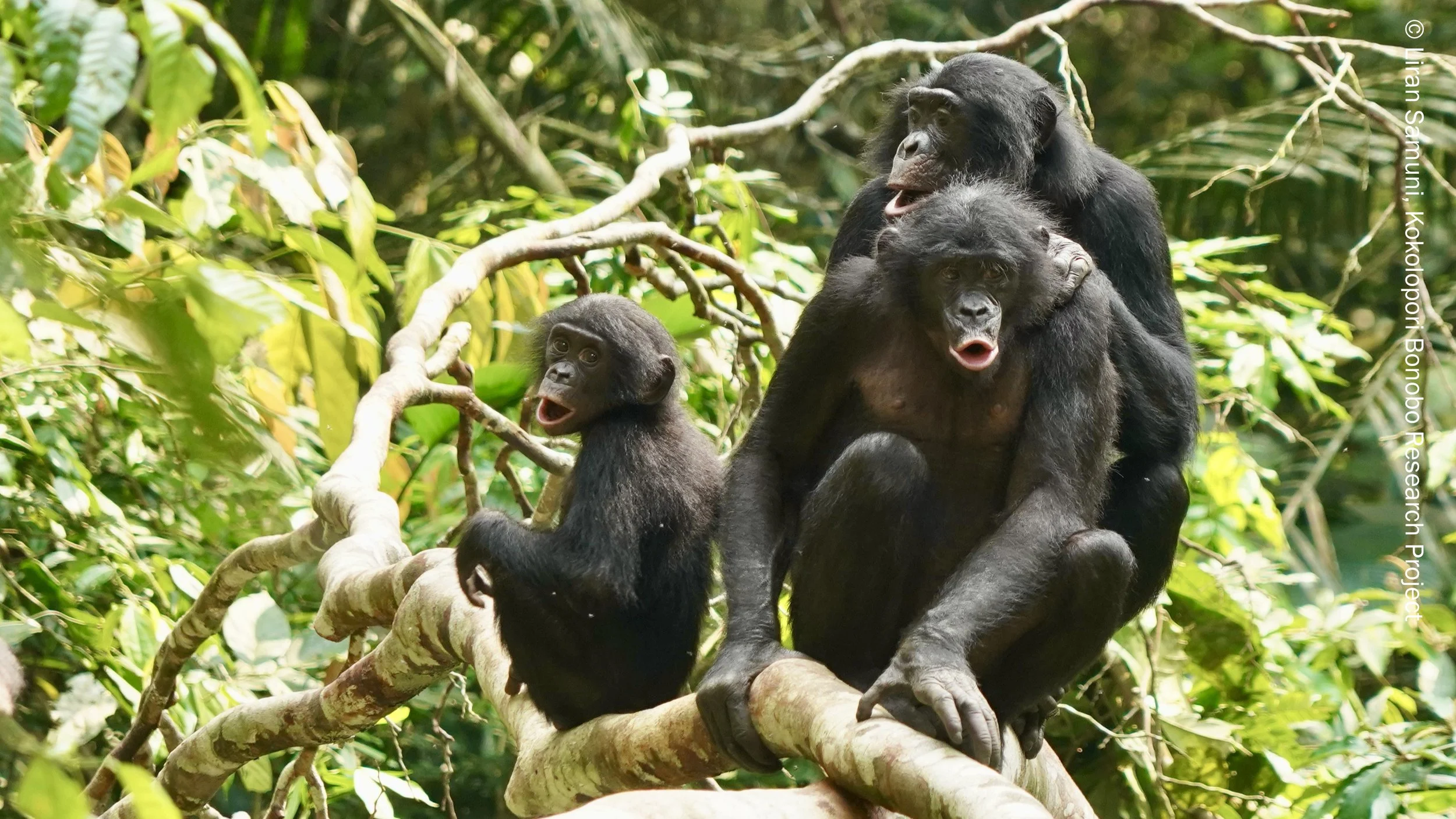
Kokolopori bonobos
Photo: Liran Samuni, Kokolopori Bonobo Research Project
The longitudinal bonobo research program at the Kokolopori Bonobo Reserve continues to provide valuable insights into bonobo behavior! In the last few months, multiple studies based on research at the Bonobo Peace Forest’s pilot site have been published. This work has had some high-profile exposure in National Geographic magazine, the New York Times, Science, and Nature.
Led by scientists from Harvard University, one study focused on the ways female bonobos maintain power over their male counterparts. Analysis of behavior of Kokolopori bonobos, as well as other wild bonobo groups, indicated that female bonobos form alliances to keep males “in check” and gain power within their groups.
Another study examined the development of vocal communication in great apes and has provided valuable insight into the evolution of human language development. Vocalizations between adults and infants in wild populations of great apes (including our Kokolopori bonobos) were analyzed to understand how apes learn to communicate. The results showed that young apes learn by listening to the communications going on around them. This is in contrast to how human babies learn—from constant chatter directed at them.
As work continues at Kokolopori, we are looking forward to launching a study this year to understand the population and distribution of bonobos at our Lilungu site… more to come on that!
In collaboration with local communities, and with the support of generous donors like you, we have been able to create safe spaces for bonobos and other wildlife to thrive. This has allowed us to learn more about our primate “cousins”—and there is still so much more to discover!